
The Chesapeake Circuit Court
The Circuit Court is Virginia's trial court of general jurisdiction and a court of record. In Chesapeake it hears felonies, civil cases above the district limits, divorce, and appeals from the district courts. It is also the home for probate, wills, land records, and judgments through the Clerk. The court sits in the 1st Judicial Circuit.
The court runs on a term schedule, with criminal terms on the first Tuesday of the month at 2:00 p.m. and civil terms at 10:00 a.m. The Chesapeake Circuit Court judges listed are Hon. Marjorie T. Arrington as Chief Judge, plus Hon. Rufus A. Banks, Jr., Hon. Linda L. Bryant, Hon. Andrew D. Kubovcik, Hon. Robert G. MacDonald, and Hon. David J. Whitted.
The official Virginia courts page lists the clerk, judges, schedule, and address, on the Chesapeake Circuit Court page.
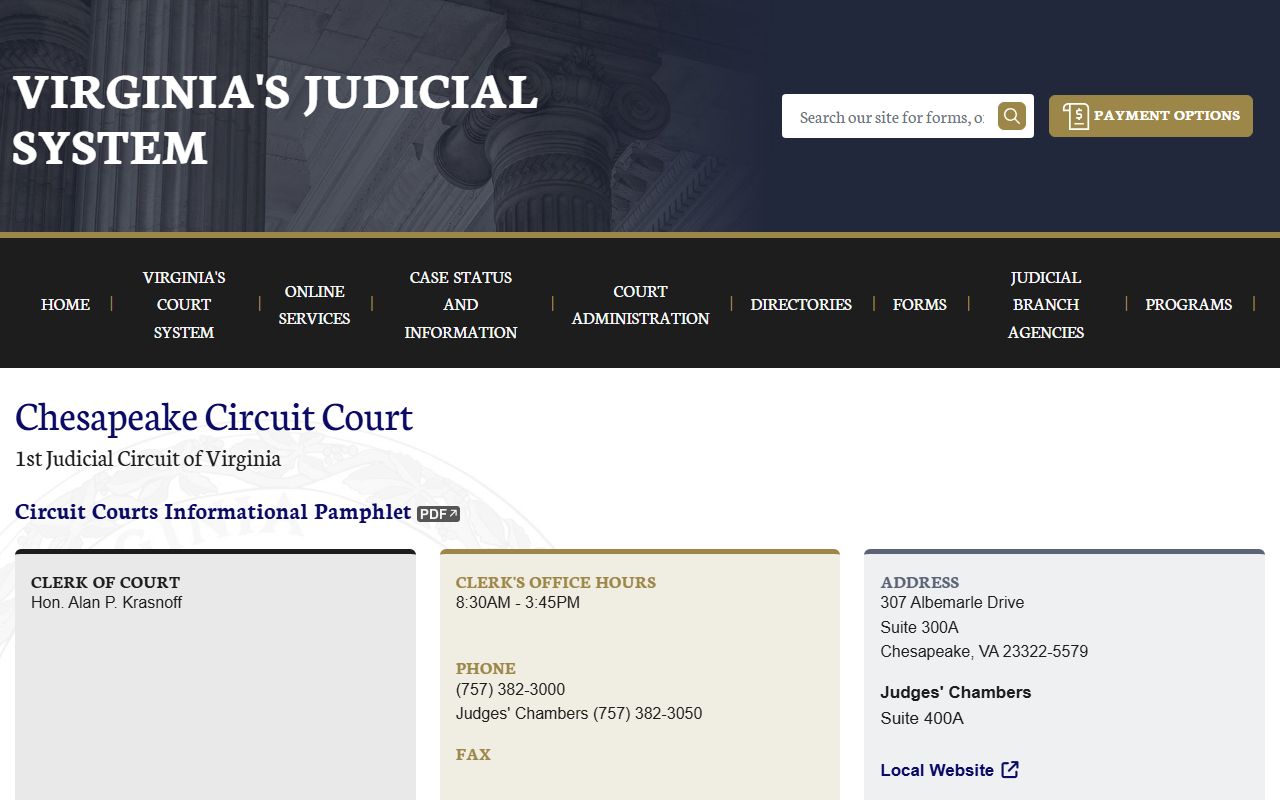
That page confirms the 1st Judicial Circuit assignment and the Clerk contact used for circuit record requests.
Day to day, the court keeps fixed rhythms. Civil motions are heard on Wednesdays, grand juries meet the first day of each term, and civil cases are set by praecipe filed by the Thursday before Term Day. Trials generally convene at 9:00 a.m. and arraignments at 9:30 a.m. Final orders are mailed out, so the court asks for self-addressed stamped envelopes.
How a Chesapeake Case Moves Through the Courts
Virginia courts form a clear ladder. The two district courts handle the front-line volume. The Circuit Court sits above them as the court of record. Above the Circuit Court are the state appellate courts. Knowing the ladder helps you predict where a case record lives at each stage.
Case flow: General District & J&DR Courts › Chesapeake Circuit Court › Court of Appeals of Virginia › Supreme Court of Virginia
The Virginia Circuit Court jurisdiction overview explains what this level of court hears statewide, on the Virginia Circuit Court page.
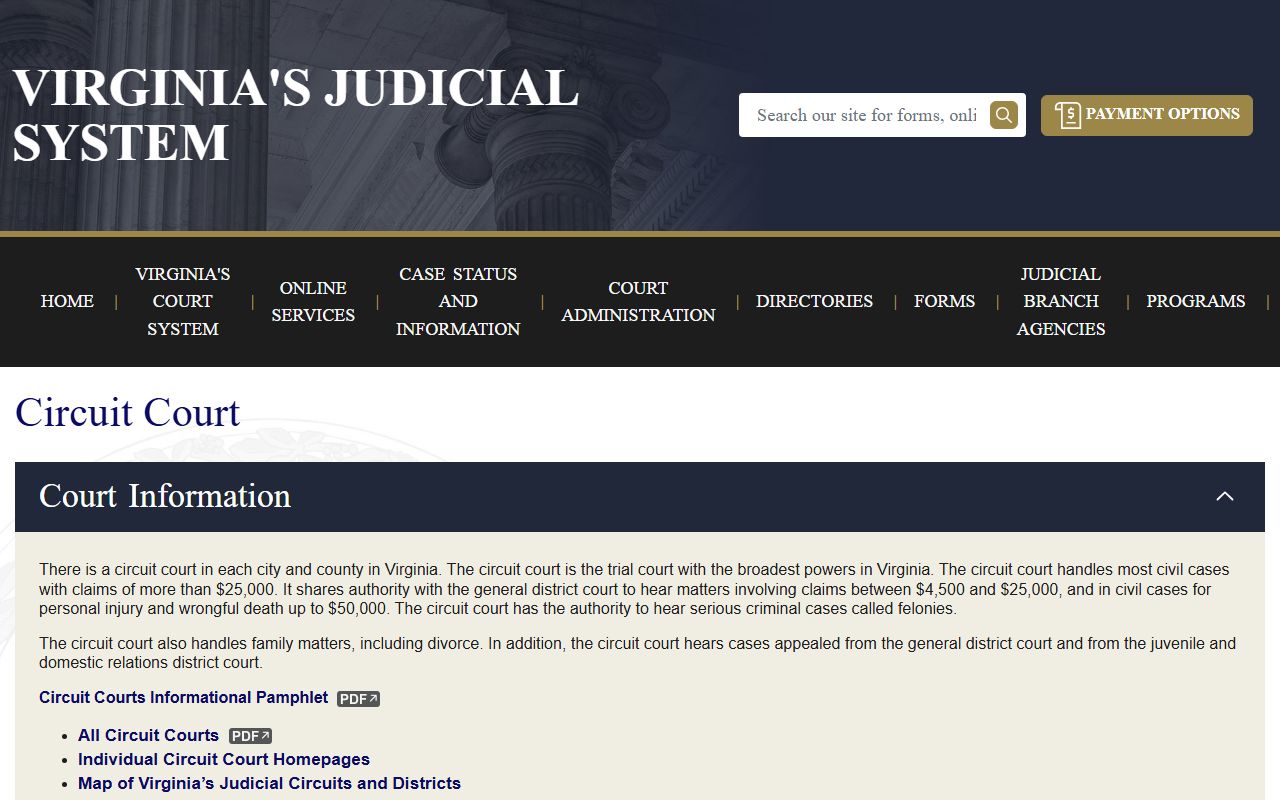
An appeal from a district court is often a fresh trial in the Circuit Court, which then becomes the court of record for that matter.
Chesapeake Courts and Offices
The city's trial courts and the magistrate cluster on Albemarle Drive. The table below lists each court, its address, phone, clerk, and main case types. The Circuit and General District courts share the building at 307 Albemarle Drive, while the J&DR Court is next door at 301. Security is strict at all of them, and phones and bags may not be allowed inside, so plan to leave them in your vehicle.
| Court / Office | Address | Phone | Clerk / Jurisdiction |
|---|---|---|---|
| Chesapeake Circuit Court | 307 Albemarle Drive, Suite 300A | 757-382-3000 | Clerk Alan P. Krasnoff; felonies, higher civil, divorce, probate |
| General District Court | 307 Albemarle Drive, Civic Center | 757-382-3100 | Clerk Glynis G. Townsend; misdemeanors, traffic, small claims |
| J&DR District Court | 301 Albemarle Drive, Second Floor | 757-382-8100 | Clerk Toya C. Southall; juvenile, custody, support |
| Magistrate Office | Court / Sheriff complex | 757-382-6388 | OES supervised; warrants, summonses, bail |
Circuit Court vs General District vs J&DR
The three trial courts split the work by case type and seriousness. The Circuit Court keeps records the longest and hears the most serious cases. The General District Court moves the high volume of traffic and minor cases. The J&DR Court handles family and juvenile matters, with the tightest public-access limits.
| Feature | Circuit Court | General District | J&DR Court |
|---|---|---|---|
| Court of record | Yes | No | No |
| Main cases | Felonies, divorce, higher civil | Traffic, misdemeanors, small claims | Custody, support, juvenile |
| Public access | Broad, with exceptions | Broad, with exceptions | Heavily restricted |
| Appeals go to | Court of Appeals of Virginia | Circuit Court | Circuit Court |
Chesapeake General District Court
The General District Court is the busy front door of the local court system. It handles traffic, misdemeanors, preliminary felony hearings, small claims, suits in debt, and lower-dollar civil cases. It has exclusive authority for claims of $4,500 or less and shared authority for claims up to $25,000. It is not a court of record, so appeals move to the Circuit Court.
The court runs segmented dockets and lists several judges, including Hon. Michael R. Katchmark as Chief Judge. The statewide jurisdiction overview describes what this court hears, on the Virginia General District Court page.
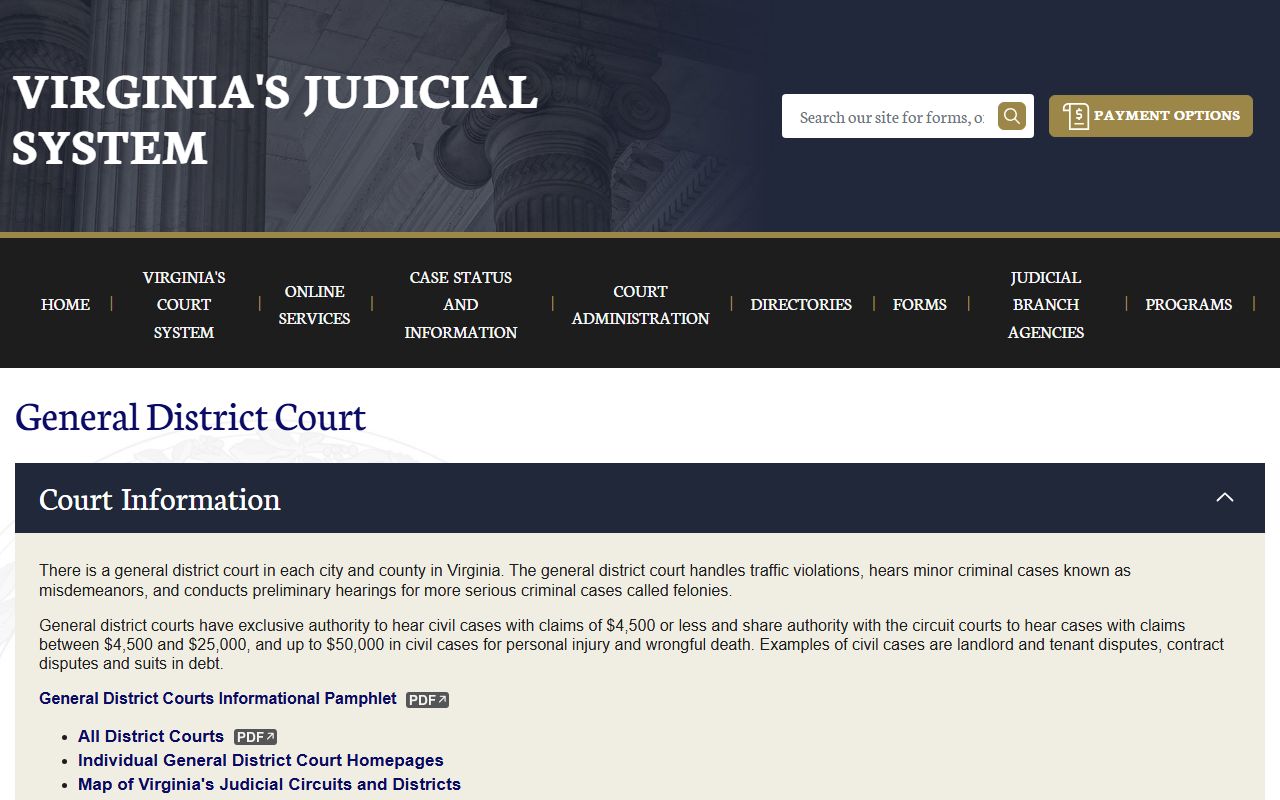
The court splits its phone lines by division, with separate numbers for civil information, the civil division, and pre-court and post-court traffic and criminal matters. Civil dockets run weekday mornings, criminal and traffic at 8:30 a.m., and small claims on the fourth Wednesday. For traffic matters specifically, the Chesapeake traffic court records page covers citation lookup and payment.
Juvenile and Domestic Relations District Court
The J&DR Court is a separate district court for family and juvenile matters. It hears juvenile delinquency, juvenile traffic, custody, visitation, support, family abuse, and child abuse or neglect cases. It also hears criminal cases where the defendant and victim are family or household members. Many of its records are confidential by law.
The statewide J&DR overview explains the court's jurisdiction, on the Virginia J&DR Court page.
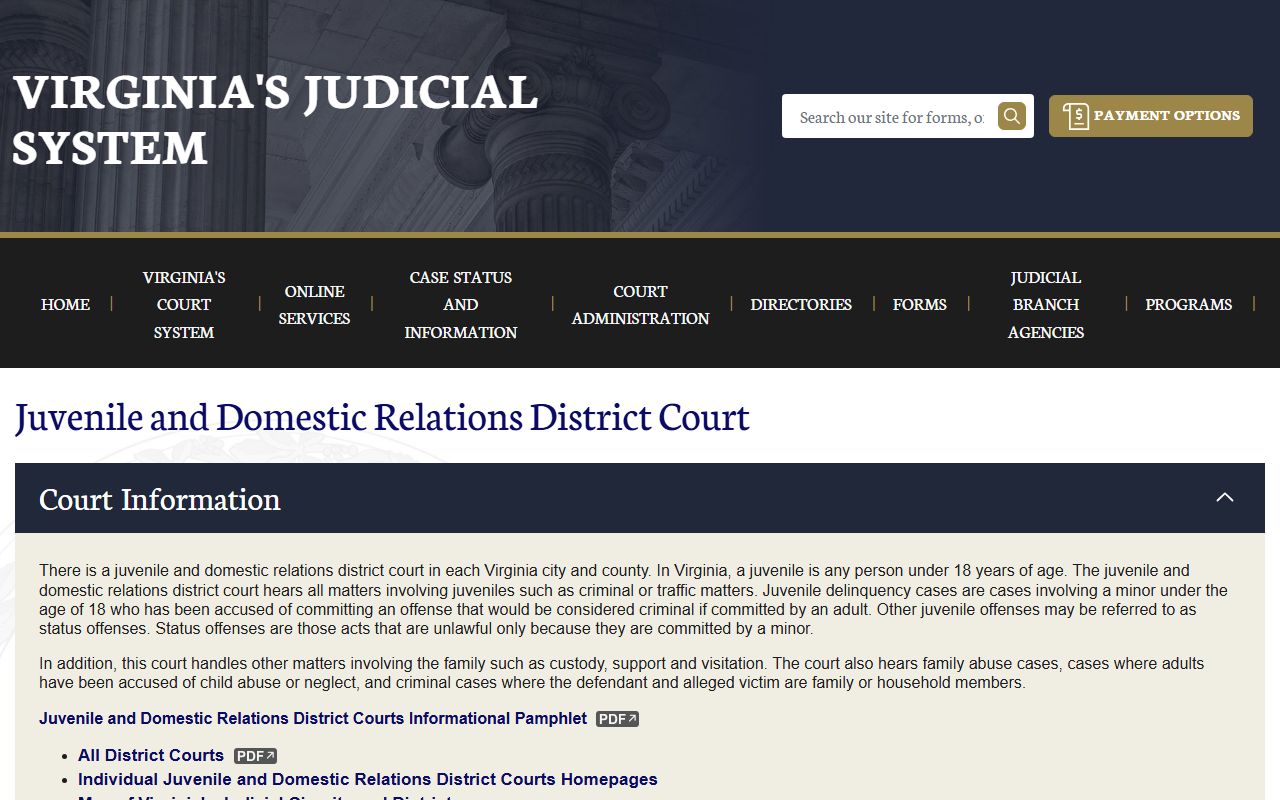
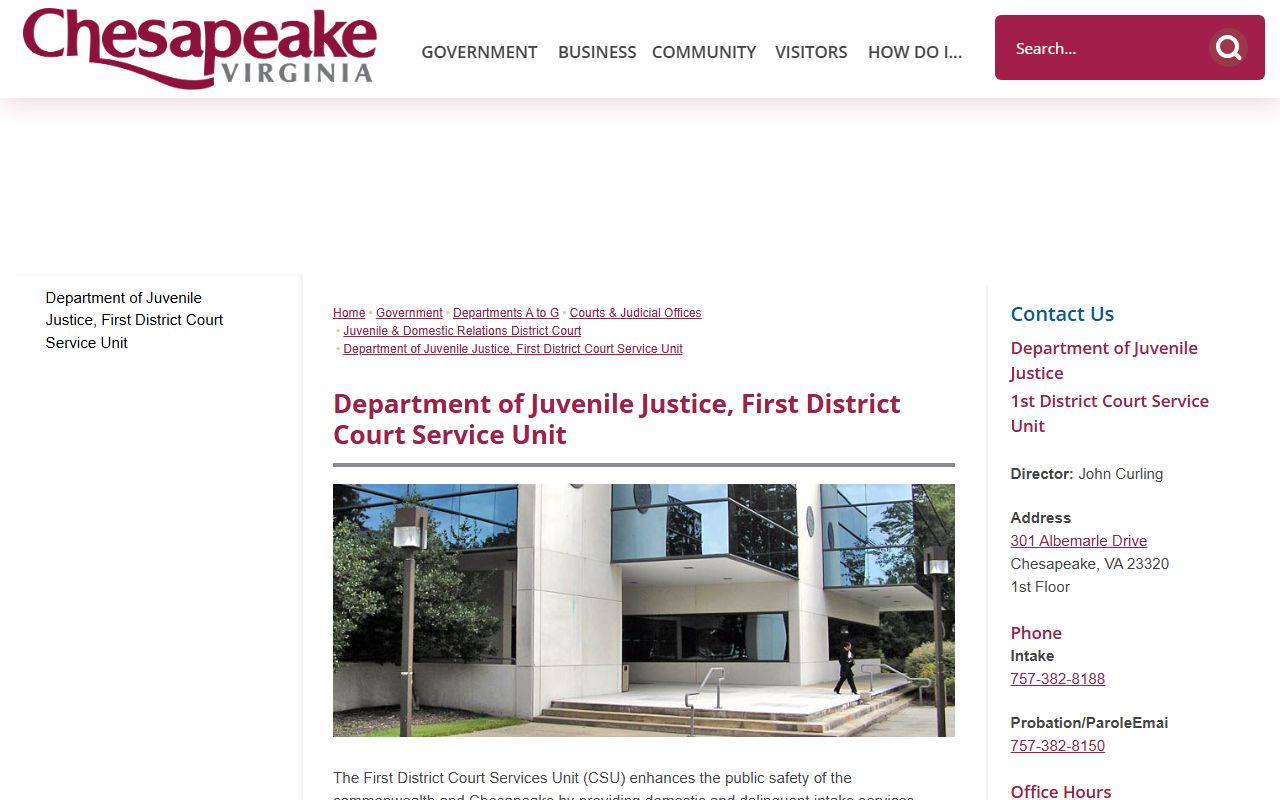
Arraignment timing in the J&DR Court follows a clear rule. A detained defendant is arraigned the next day at 9:00 a.m., a released defendant about one week out, and an out-of-jurisdiction matter about three weeks out. The court lists Hon. David L. Jones as Chief Judge. Chesapeake also runs the First District Court Service Unit, which handles juvenile intake, probation, and parole under this court.
The Chesapeake Magistrate Office
Magistrates are judicial officers supervised by the Office of the Executive Secretary of the Supreme Court of Virginia. They give an independent review of complaints from police, deputies, and citizens. They issue warrants, summonses, and emergency protective orders, and they make early bail decisions. They do not investigate or prosecute. A magistrate also cannot give legal advice or clear a warrant by phone, since that needs the proper court process through the clerk and a judge.
The Magistrate Office sits in the court and sheriff complex. For outstanding warrants and summonses, the office directs people to the Warrant Unit. The Chesapeake warrant records page covers that contact and the warrant process.
Prosecution and Defense
Two offices round out the criminal side of these courts. The Commonwealth's Attorney is Virginia's prosecutor, handling felonies, DUIs, many misdemeanors, and expungement hearings across all three courts. The Public Defender represents people who cannot afford a lawyer, but only by court appointment.
The First District Court Service Unit supports the juvenile side, with intake and probation services tied to the J&DR Court, described on the city's First District Court Service Unit page.
The Commonwealth's Attorney is an elected office, and the Public Defender is an independent state agency. Together they handle the prosecution and defense of most criminal cases in the city. For how arrests turn into cases in these courts, see the Chesapeake arrest records page.
Appeals to Higher Courts
Above the local courts sit the state appellate courts. The Court of Appeals of Virginia reviews many Circuit Court decisions, with expanded appeal-of-right jurisdiction after recent reforms. The Supreme Court of Virginia is the court of last resort, with mostly discretionary review.
An appeal does not erase the original record. The lower court file stays, and the appeal creates its own record at the higher court. So a single matter can leave files at several levels, which is why a full search sometimes means checking more than one court.
Federal cases follow a different track entirely. The U.S. Court of Appeals for the Fourth Circuit handles federal appeals for Virginia, which is not the same as the Court of Appeals of Virginia. For circuit case files and dockets, see the court records and court dockets pages.