
How to File a Chesapeake Public Records Request
The first decision is where to send the request. A court file goes to the clerk of the court that holds it. A city agency record goes through the city's FOIA process. Sending the request to the wrong office slows everything down, so match the record to the office before you write.
Virginia FOIA gives a public body a set time to respond and lets it charge reasonable costs. The body can provide the records, withhold them under an exemption, redact parts, or ask for more time. A clear, specific request gets the best result.
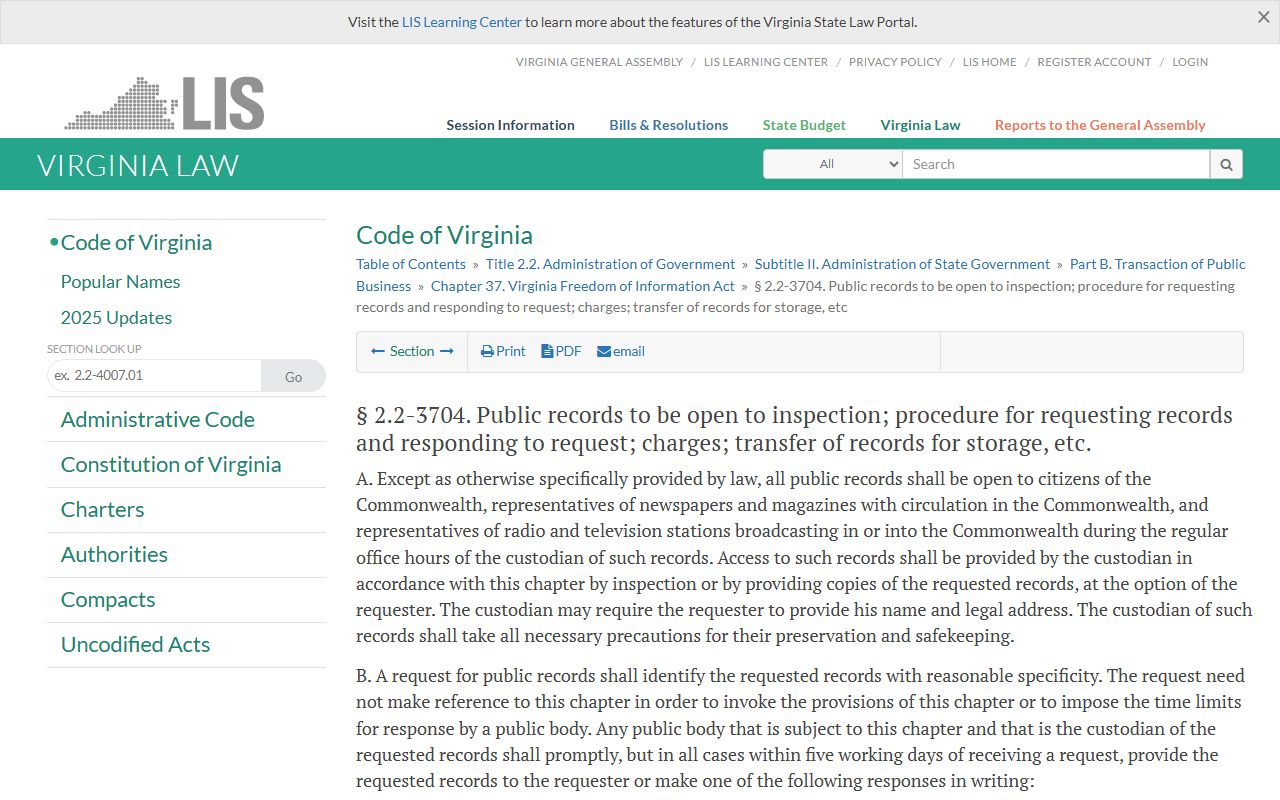
The request procedure, response timeline, and charges are set in Va. Code § 2.2-3704.
With the office and the statute in mind, the request runs in clear steps.
- Identify whether the record is a court file or a city agency record.
- Send the request to the clerk or the city FOIA officer.
- Describe the record clearly, with names, dates, or a case number.
- Ask about fees before the work starts.
- Review the response, including any redactions or exemptions cited.
Virginia FOIA Basics for Chesapeake
Virginia FOIA states a policy of open government. It applies broadly to public bodies, officials, and employees, with exemptions that are meant to be narrow. The act covers records held by city agencies and many local bodies. It does not make every sensitive record public, and it does not override court sealing orders.
The full act sits in Va. Code § 2.2-3700 et seq. Enforcement usually runs through a petition to a court, and a state FOIA Council offers guidance and training. For a court record, though, FOIA is often not the path at all, since the clerk handles court files directly.
FOIA access in Virginia extends to citizens and to members of the news media. A public body cannot demand a reason for the request in most cases. It can ask you to put the request in writing and to give enough detail to find the record. If a body misses the deadline or denies access without a valid exemption, the requester can seek relief in court.
Court Records vs Agency Records
This split confuses many requesters. A court record is a filing in a case, such as an order, a decree, or a docket. A city agency record is something a department holds, such as a permit, a contract, or a report. The two follow different rules and go to different offices.
When the record is a court filing, the request usually goes to the clerk, not the city FOIA office. When the record is an agency record, the city FOIA process applies. When the record is law-enforcement investigative material, a separate statute may limit what is released. Knowing which bucket a record falls into is half the battle.
For example, a divorce decree is a court record from the Circuit Court Clerk. A city building permit is a city agency record handled through the city FOIA process. An arrest report is a police record under the criminal-records statute. Three documents, three different paths, even though all three feel like public records to the person asking.
What the Chesapeake Clerk Maintains
The Clerk of the Circuit Court holds far more than case files. The office records deeds and plats, judgments, and financing statements. It keeps circuit criminal and civil files, divorce records, probate and wills, marriage licenses, concealed handgun permits, and DD-214 military separation papers. That makes the Clerk a central public-record office for the city.
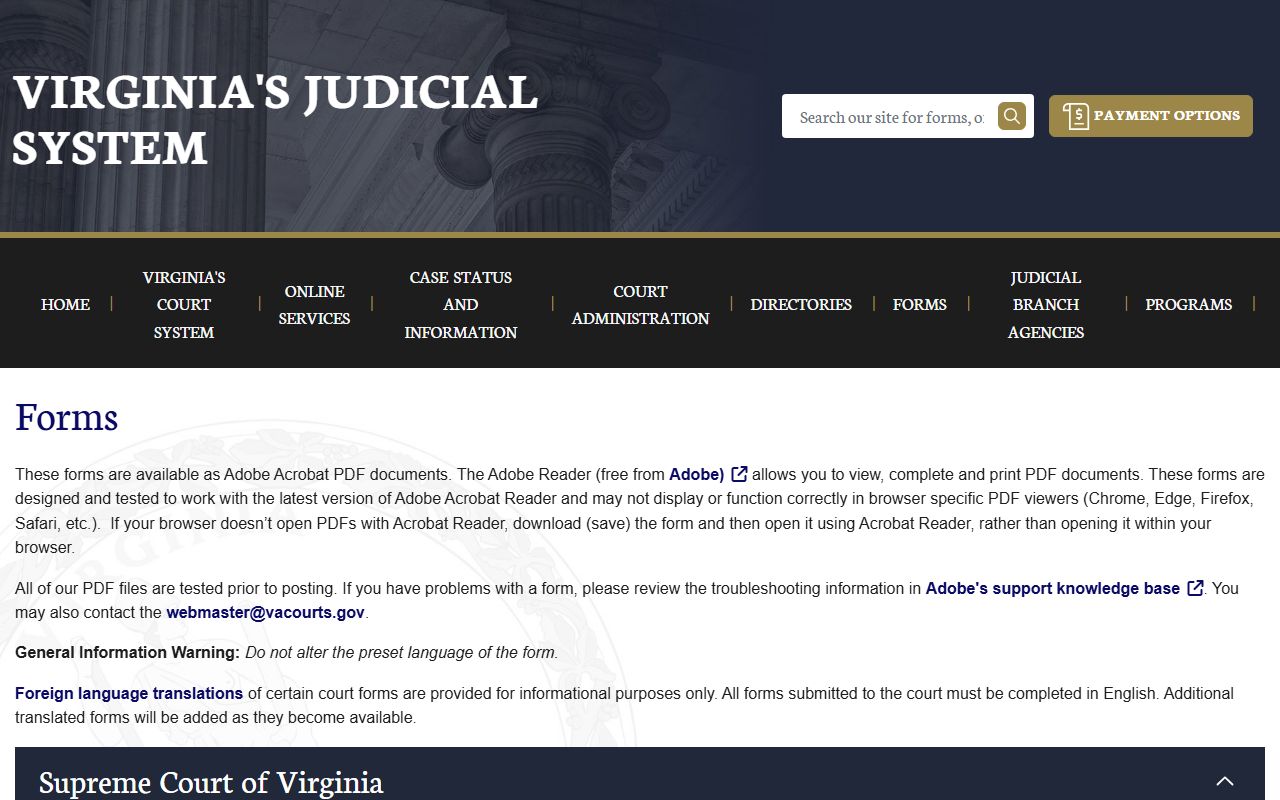
Many documents are available through the paid Secure Remote Access or in person on the third floor. The Clerk also links Virginia court forms, which help with common filings and requests, on the Virginia court forms page.
For the full list of Clerk services and copy options, see the Clerk of the Circuit Court page.
Public Records Request Fields
A good request includes a few key items, whether you write to the clerk or the city. The clearer the request, the faster and cheaper the response. The table below shows the information to include.
| Field | Required | Notes |
|---|---|---|
| Record description | Yes | Be specific: type, names, dates, case number. |
| Requester contact | Yes | Name and a way to reach you. |
| Office or department | Yes | Clerk for court files; city for agency records. |
| Format requested | No | Copy, certified copy, or inspection. |
| Fee agreement | Conditional | State a cost limit or ask for an estimate. |
Chesapeake Records Fees
Two fee tracks apply, and they are not the same. Clerk copy fees are posted and fixed. FOIA charges are calculated under state law and can vary by request. The Clerk charges $0.50 per page for a plain copy and $2.00 for certification with a raised seal.
| Item | Amount |
|---|---|
| Plain copy per page | $0.50 |
| Certification / raised seal | $2.00 |
| FOIA request charges | Actual cost under Va. Code § 2.2-3704 |
FOIA charges may include staff search time, copying, and the medium used, within the statute's limits. Traffic fines, civil filing fees, and probate taxes are separate categories with their own schedules, so do not assume one flat rate covers every transaction.
Confidential Records and Exemptions
Not everything is open. The Clerk's records page says adoption files, juvenile matters, and sealed documents are not disclosed. FOIA also lists exemptions for personnel, legal, security, and privacy-sensitive material. Court sealing orders, juvenile confidentiality, and expungement all block access under their own statutes.
Mental-health commitment records, grand jury matters, Social Security numbers, financial account numbers, and protected victim or minor data are held back as well. A denial should cite the specific exemption, which lets a requester decide whether to challenge it. If only part of a record is exempt, the office should release the rest with the protected parts redacted, rather than withholding the whole file.
Law Enforcement Records
Police and arrest records follow their own rule. Disclosure of criminal incident, arrest, and investigative records is controlled by Va. Code § 2.2-3706. Some incident and arrest data is open, while active investigative files may be withheld. That balance protects open cases without closing all police records.
This matters for anyone seeking an arrest report or an incident record. The request may return some fields and withhold others. For how arrest data connects to the courts, see the Chesapeake arrest records page.
Land and Historical Records
Chesapeake's public records reach unusually far back. The Clerk's land system carries deed indexing and imaging from 1637, will records from 1755, plats from 1879, judgments from 1987, and financing statements from 1998. The portal also notes that South Norfolk data is on file, a nod to the city's roots.
These records serve title searches, genealogy, and historical research. Document images come through the paid Secure Remote Access or an in-office visit. The depth of these records is one of the city's most distinctive public-record features. A researcher tracing a family or a property line can often follow it across many centuries through this one local records office.
Self-Help and Legal Help
Several resources help people who hit a wall with a request. Legal Aid Society of Eastern Virginia handles qualifying civil matters for low-income Hampton Roads residents, though not criminal or traffic cases. The Virginia Poverty Law Center offers statewide legal-help navigation.
The Virginia Poverty Law Center connects residents to local legal aid and statewide resources, on its legal-help page.

The Virginia court self-help site also offers neutral legal information and forms for common matters. The Virginia State Bar Lawyer Referral Service can connect you with a participating lawyer for a short paid consultation when a request turns into a legal dispute.