
How to Find Chesapeake Arrest Records
Start with the jail. When a person is arrested in Chesapeake, the Sheriff's Office books them into the Chesapeake Correctional Center and lists them on the public inmate lookup. That tool is the fastest way to see a current or recent local booking. It lets you search by name, subject number, booking number, custody status, and booking date range.
The inmate lookup is not a full criminal history. The Sheriff says the data can change quickly and may not show a person's true status. For a recent arrest, the roster is the right first stop. For the case that follows, you move to the court systems, where the charge, plea, and disposition appear over time.
Before you search, get the full legal name and, if you have it, the booking or subject number. A number search avoids common-name mix-ups. Then follow these steps.
- Open the Sheriff's inmate lookup for the Chesapeake Correctional Center.
- Search by name, or by booking or subject number for a single match.
- Check the custody status and the booking date.
- Move to the court case system to follow the charge and disposition.
- Contact the Virginia State Police for a full criminal-history record.
Arrest Record vs Criminal Court Record
These two records are not the same, and mixing them up causes errors. An arrest record is made by law enforcement at the time of booking. A criminal court record is made by the court as the case moves through the system. One can exist without the other. A person can be arrested and never charged, or charged and never convicted.
| Feature | Arrest Record | Criminal Court Record |
|---|---|---|
| Created by | Police and the Sheriff's jail | The Circuit or General District Court |
| Shows | Booking, custody status, initial charge | Charge, plea, hearings, disposition, sentence |
| Where to look | Sheriff's inmate lookup | Virginia court case systems |
| Means a conviction? | No | Only if the disposition says so |
For the court side of a case, the Chesapeake court records page covers how to search felony and misdemeanor files.
The Four Layers of Chesapeake Criminal Records
Criminal information in Chesapeake sits in four separate layers, each held by a different office. Knowing the layers keeps a search on track and explains why one office cannot answer every question.
- Police and arrest layer - made by law enforcement and governed by Virginia public-records law.
- Jail and custody layer - made by the Sheriff's Office and shown in limited form on the inmate lookup.
- Court layer - the General District Court for misdemeanors and preliminary hearings, the Circuit Court for felonies and appeals.
- Criminal-history layer - the statewide record kept by the Virginia State Police.
The Sheriff's lookup page makes this clear. It says its system is not a complete offender database and directs users to the Virginia State Police for past criminal history. A jail search is not a background check.
Charges vs Convictions in Chesapeake Records
A charge is an accusation. A conviction is a finding of guilt. The gap between them matters for jobs, housing, and reputation. Many charges end without a conviction, through dismissal, acquittal, or a decision not to prosecute. The court disposition is the field that settles the question.
| Point | Charge | Conviction |
|---|---|---|
| What it is | A formal accusation | A guilty finding by the court |
| Set by | Police, magistrate, or grand jury | A judge or jury |
| Final? | No, the case is still open | Yes, unless appealed or vacated |
| Where shown | Arrest and early court records | The disposition line of the court record |
When a record shows only a charge, the safe reading is that the matter may still be pending. Confirm the outcome with the court before treating a charge as a conviction.
Booking, Mugshots, and the Jail Roster
Booking is the intake step at the Chesapeake Correctional Center. During booking, staff record the person's details, the arrest charge, and a date. Medical and mental-health screening also happens at booking. The public roster shows custody status and booking dates, but the official sources do not confirm that mugshots, bond, or full charge lists appear in the public view.
For the live roster, deposits, mail, phone, and visits, the Chesapeake inmate records page has the full detail. To check whether someone has been released, the released inmates page explains the verification chain.
Felony and Misdemeanor Court Records
After an arrest, the case moves to court. The General District Court handles misdemeanors, traffic, and the preliminary hearings that test felony charges. If a felony moves forward, it goes to the Circuit Court, which is the court of record for the most serious cases and for misdemeanor appeals. Each court keeps its own file, and a single arrest can produce records in both.
The Commonwealth's Attorney prosecutes these cases. The office handles felonies, DUIs, many domestic-violence misdemeanors, forfeitures, and expungement hearings. Its mission and case scope are set out on the city's Commonwealth's Attorney page.

The office is led by an elected Commonwealth's Attorney. The city staff directory identifies Matthew R. Hamel and notes a four-year term that began January 1, 2022.
Prosecutor and Public Defender
Two offices anchor the criminal process. The Commonwealth's Attorney represents the Commonwealth and decides how to pursue charges. The Public Defender represents people who cannot afford a lawyer, but only when the court appoints the office to a case. The Public Defender handles J&DR, General District, and Circuit Court matters, plus appeals.
The staff directory confirms the current prosecutor and term, on the city's staff directory listing.

The Public Defender office is at 135 Hanbury Road West, Suite D, with phone 757-382-0098. It is an independent state agency and takes cases only by court appointment.
Sealed vs Expunged Chesapeake Records
People often use these words as if they mean the same thing. They do not. Sealing restricts who can see a record while keeping it in existence for authorized access. Expungement removes eligible records from public view entirely. Virginia's traditional expungement is narrower than in some states, and new sealing rules have been phasing in.
| Point | Sealed | Expunged |
|---|---|---|
| Effect | Hidden from general public view | Removed from public access |
| Record still exists? | Yes, for authorized access | Access is limited by statute |
| Typical path | Court order or statute | Petition in Circuit Court |
The expungement statute sets who qualifies and how the court decides, in Va. Code § 19.2-392.2.
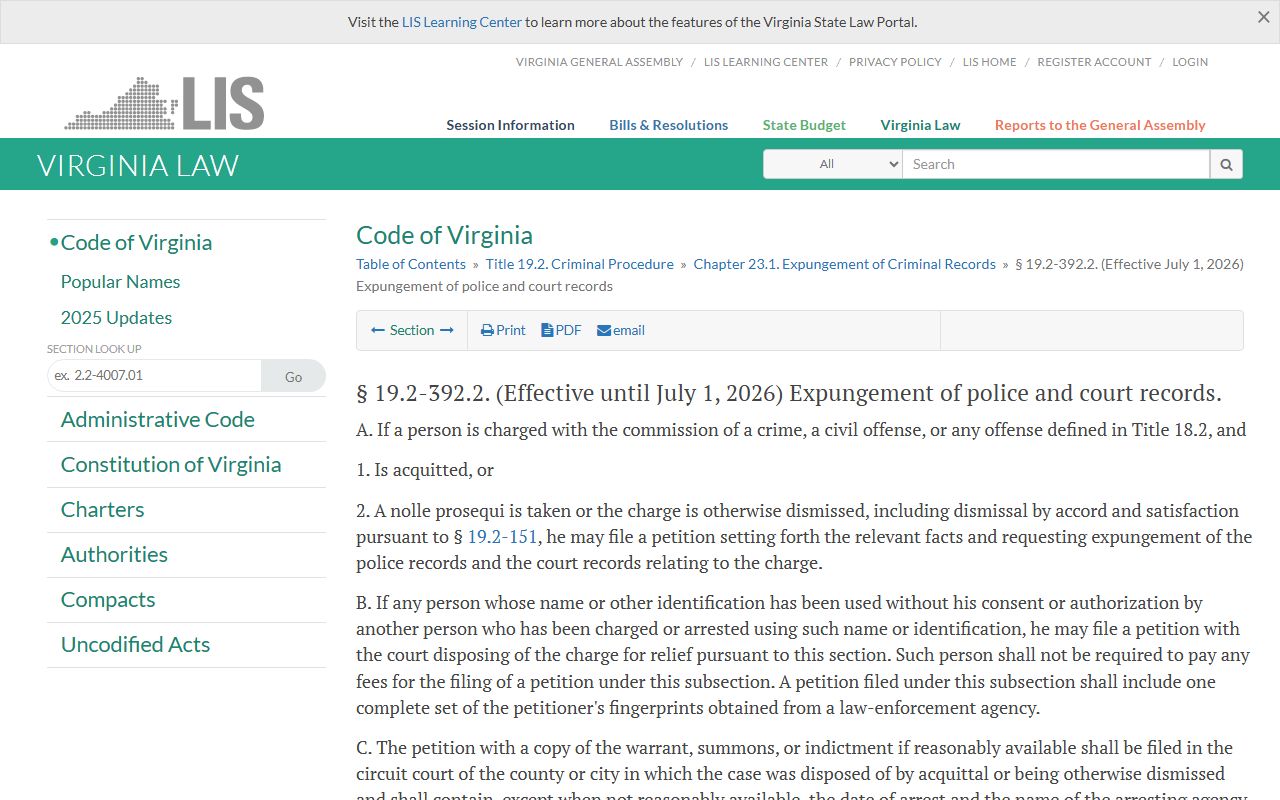
Because the 2026 sealing rules are taking effect in stages, confirm the current version of the statute before relying on a broad eligibility claim.
How Expungement Works in Chesapeake
Expungement is not automatic, even for a dismissed case. A petitioner normally files in the Circuit Court, gives notice to the Commonwealth's Attorney, and supplies fingerprints if required. The Sheriff must serve a copy of the petition and warrants on the Commonwealth's Attorney. The Civil Division of the Circuit Court can be reached at 757-382-3037.
Eligible situations often include acquittals, a decision not to prosecute in qualifying cases, and wrong-person or identity-theft arrests. Common denial reasons are an ineligible conviction, the wrong court, a missing fingerprint card or order, or an objection by the Commonwealth. The downstream handling of sealed and expunged records is set in Va. Code § 19.2-392.3 et seq.
Virginia State Police Criminal History
For a full criminal history, the source is the Virginia State Police, not the jail roster. The Sheriff's lookup page says so directly. A statewide record pulls together arrests and dispositions across localities, which a single jail search cannot do. Access to a full record is regulated, and disclosure of arrest and incident data follows Va. Code § 2.2-3706.
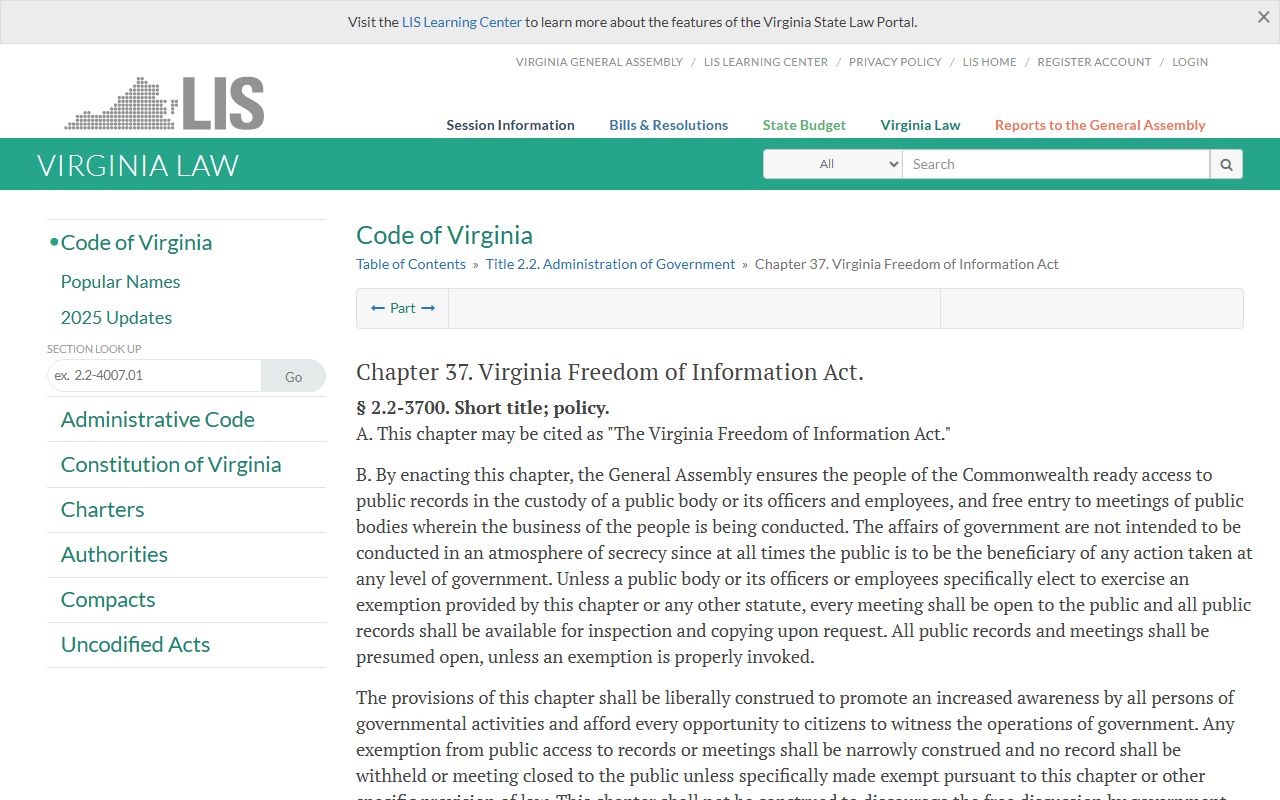
That statute controls what law-enforcement and arrest material is open and what stays closed during an active investigation.
Background Checks and Record Use
Public arrest and court data is easy to misread. A booking with no court outcome, a dismissed charge, or an old arrest can all look worse than the facts. Federal law also limits how this kind of data may be used. Court records, jail rosters, and aggregated reports may not be used for credit, employment, tenant, or insurance decisions in a regulated way.
Note: This site is not a consumer reporting agency, and its information may not be used for any purpose covered by the Fair Credit Reporting Act.