
How to Search Chesapeake Traffic Court Records
Adult traffic cases sit in the General District Court. You can search them through the Virginia General District Court case system by name, case number, or hearing date. The summons you received lists the court, the date, and whether you can prepay. Read it first, because it tells you which path to take.
The Virginia courts traffic page links the official payment portals for each court level. It is the right starting point to pay an eligible ticket online.
The statewide traffic and case payment page links the General District, Circuit, and J&DR payment systems, on the Virginia courts traffic payment page.
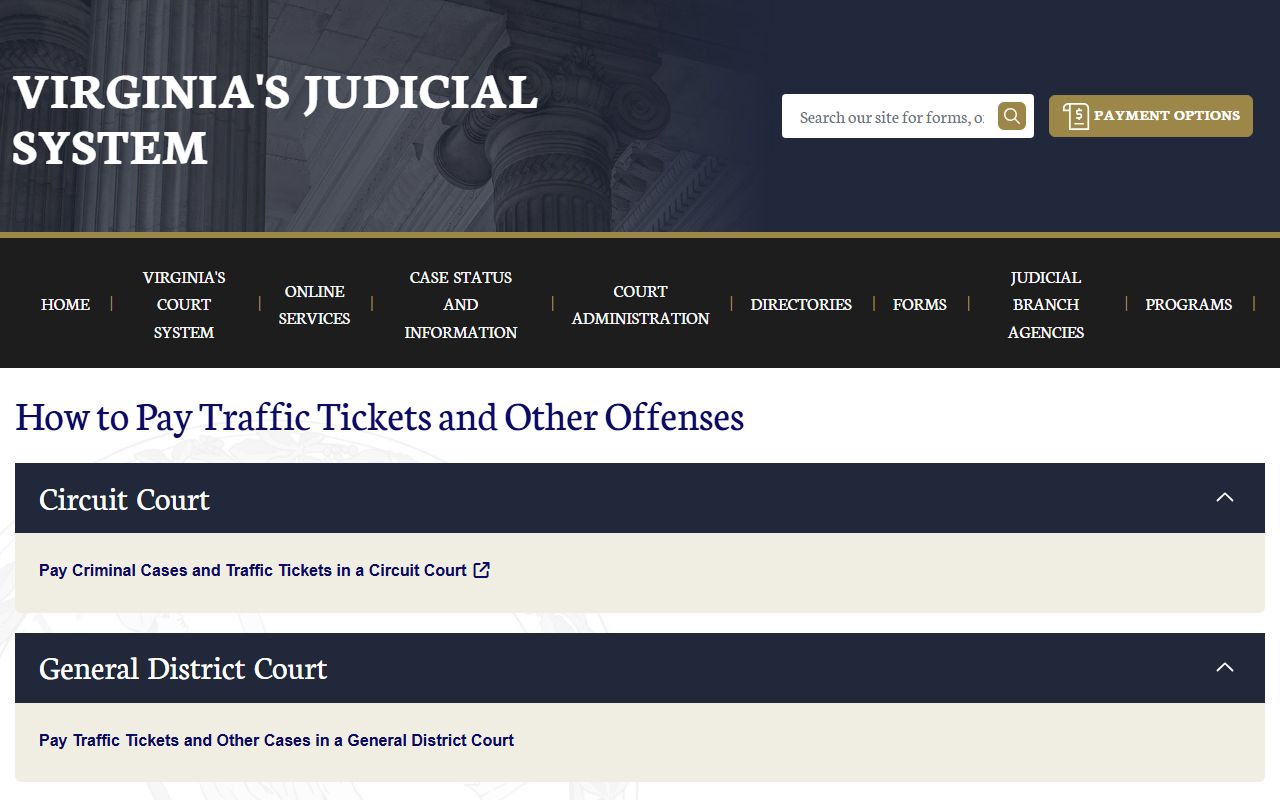
Use the court named on your summons, not the court you assume handles the case.
Which Courts Handle Traffic Cases in Chesapeake
The General District Court is the main traffic court for adults. It hears traffic violations, minor criminal cases, and preliminary felony hearings. Traffic dockets run Monday through Friday at 8:30 a.m. on a segmented schedule. Juvenile traffic can route through the J&DR Court, and serious or appealed matters can reach the Circuit Court.
The official General District Court page lists the divisions, judges, and schedule, on the Chesapeake General District Court page.
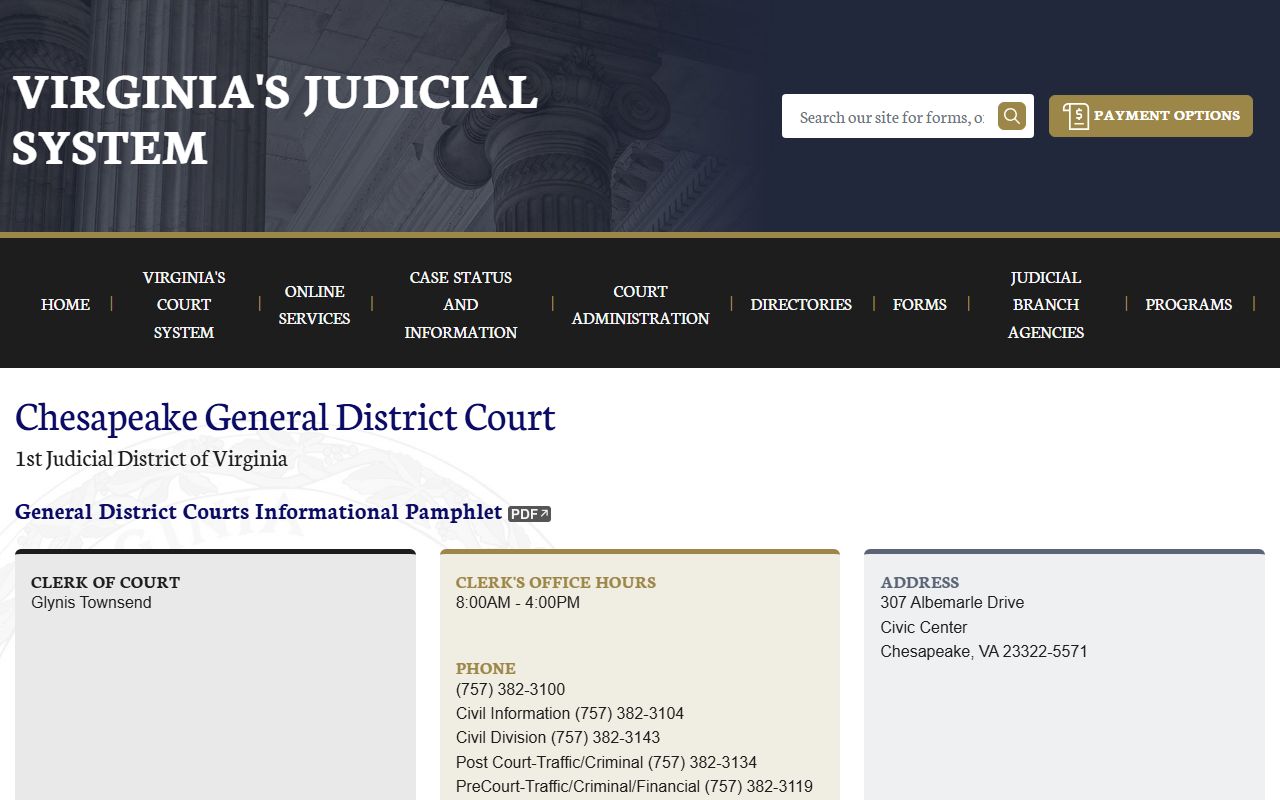
Because traffic, criminal, and civil calls use different phone lines, pick the right number when you have a question about a traffic case.
Types of Traffic Cases on Record
Traffic records cover a wide range of cases. Some are minor infractions paid by mail. Others are serious and route to criminal court. Knowing the type helps you decide whether to pay or to fight.
- Speeding and other moving violations.
- Equipment, registration, and inspection violations.
- Reckless driving, which Virginia treats as a criminal charge.
- Driving on a suspended or revoked license.
- DUI and DWI, which are criminal and carry serious consequences.
Local ordinance traffic matters also appear here. A minor infraction may be prepayable, but a reckless or DUI charge is not, and it calls for legal advice.
What Chesapeake Traffic Court Records Show
A traffic court record is the case file for the citation. It tracks the charge from the summons through the disposition. The table below maps the fields you usually see. These are court fields, separate from the DMV driver record.
| Field | What It Shows |
|---|---|
| Citation / Case Number | The ID for the ticket and the court case. |
| Charge | The offense and the statute or ordinance. |
| Court Date | The hearing date and the court. |
| Plea | Guilty, not guilty, or no contest. |
| Disposition | How the case ended, such as guilty or dismissed. |
| Fine and Costs | Amounts owed and any compliance deadline. |
Searching by Citation Number vs by Name
You can search two ways. A citation or case number is the most exact, since it points to one ticket. A name search is useful when you do not have the number, but a common name can return many results. Use the number when you have it.
| Field Label | Type | Required | Notes / Format |
|---|---|---|---|
| Court / Locality | Dropdown | Yes | Select Chesapeake General District Court. |
| Case / Citation Number | Text | One path | Most exact search. |
| Name | Text | One path | Use the full legal name on the summons. |
| Hearing Date | Date | One path | Useful for a docket lookup. |
| Pay / Prepay | Link | Conditional | Appears for eligible traffic items. |
Paying or Contesting a Chesapeake Traffic Ticket
You usually have a choice: pay the ticket or contest it in court. Prepaying an eligible ticket is an admission and closes the case, but it can still be reported to the DMV. Contesting means appearing on the court date. Some charges cannot be prepaid at all.
- Read the summons for the court, date, time, and prepay eligibility.
- To prepay an eligible ticket, use the official Virginia courts payment link.
- To contest, appear in the Chesapeake General District Court at the listed date and time.
- Bring your ID, the summons, proof documents, and a payment method.
- If you hold a CDL or face a reckless or DUI charge, get legal advice before you pay.
Note: Paying a ticket can close the court case but still add a conviction and demerit points to your DMV driver record.
Public Access Laws for Traffic Court Records
Traffic court records are generally public, like other district court cases. They can be searched through the Virginia case system, with the usual limits for sealed or juvenile matters. Court records follow court rules and the state's public-records framework.
Courts also report many traffic convictions to the DMV. That reporting duty is set in Va. Code § 46.2-383 and related statutes.
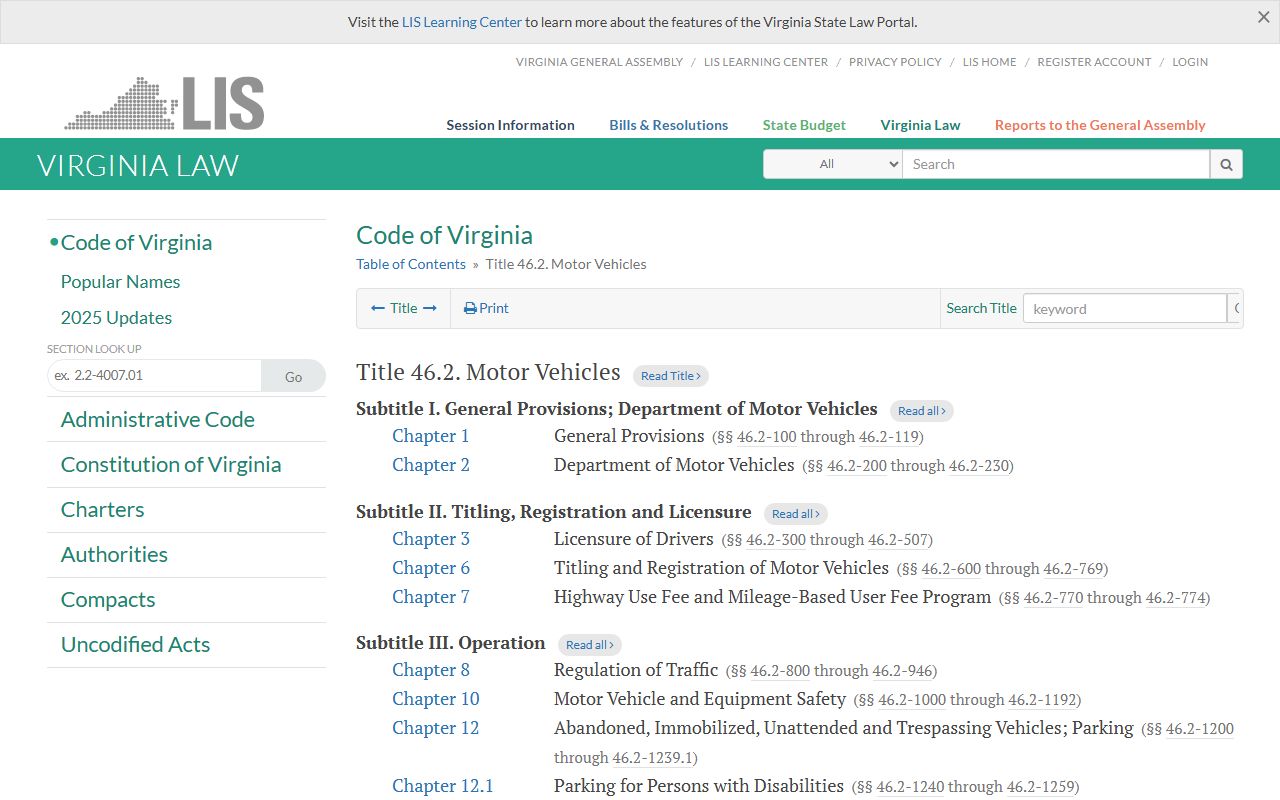
That link between the court and the DMV is why a closed court case can still affect your license.
Court Traffic Records vs State Driver Records
These two records confuse many drivers. The court traffic record is the case file held by the court. The DMV driver record is an administrative history of your license. Paying a ticket may close the court case, but it can still add a conviction and points to the DMV record. Requesting a DMV record will not give you the full court file.
| Feature | Court Traffic Record | Virginia DMV Driver Record |
|---|---|---|
| Maintained by | The court and clerk | The Virginia DMV |
| Shows | Citation, charge, court date, plea, disposition, fines | License status, convictions, demerit points, suspensions |
| Where to access | Virginia court case and payment portals | The DMV record request system |
| Certified copies | From the court clerk | From the DMV |
| Purpose | The legal case file | The driving and license history |
CDL and Commercial Driver Records
Commercial drivers face higher stakes. A conviction that seems minor for a regular driver can threaten a commercial license. CDL holders often cannot use the same dismissal options that other drivers can, and a single serious violation can lead to a disqualification.
A CDL holder should think hard before prepaying a ticket, since that admits the offense and reports as a conviction. Getting legal advice first can protect a livelihood. The court record and the DMV record both matter here, and the DMV consequences can outlast the court case by years.
DUI and DWI Cases
DUI and DWI are criminal charges, not simple traffic tickets. They are not prepayable, and they carry penalties that can include jail, fines, and a license suspension. A first offense may stay in the General District Court, while a repeat or aggravated case can reach the Circuit Court.
Because of the criminal stakes, these cases belong with the criminal-records side of the site. For how a DUI moves through the courts and the Commonwealth's Attorney, see the Chesapeake arrest records page.
Deferred Disposition and Driving Courses
Some drivers can reduce the impact of a ticket. A court may allow a driver-improvement or defensive-driving course, and the DMV awards safe-point credit for an approved course. In some cases a judge may defer or dismiss a charge on conditions. These options depend on the charge and the driver's record.
These choices are not automatic, and they are not available for every offense. Ask the court or a lawyer whether a course or a deferral applies to your specific charge before you assume it does.
Sealing or Expunging Traffic Records
Most traffic convictions stay on the record, but some matters can be cleared. A charge that was dismissed or that ended in acquittal may be eligible for expungement under Virginia law. A conviction is harder to remove, and Virginia's sealing rules have been changing in stages.
Because the rules are shifting, confirm the current law before you rely on a broad eligibility claim. The expungement process and the relevant statute are covered on the Chesapeake arrest records page.
Fees for Traffic Record Copies
Copy fees for traffic court records follow the clerk's standard schedule. The fine for the ticket itself depends on the offense and is set separately. A DMV driver record carries its own fee through the DMV record request system.
| Item | Amount |
|---|---|
| Plain copy per page | $0.50 |
| Certification / raised seal | $2.00 |
| Traffic fine | Set by offense; see the summons |
| DMV driver record | DMV fee applies; confirm current amount |
Do not assume one flat fee covers a court copy, a fine, and a DMV record, since each is a separate charge.